You priced your first order to be kind, and now every customer expects that rate. Here's how to set prices that actually pay you, in a formula you can apply to every menu, every order, every season.
The number most home bakers never calculate
It's your food cost percentage, which bakers usually call ingredient cost. It's what the raw ingredients of one item cost as a share of what you charge for it. Bakeries run tight at 25–30%. Most home bakers, when they finally do the math, find theirs at 50%, 60%, sometimes higher. At those levels you are working for groceries. The fix is to price properly, not to bake cheaper.
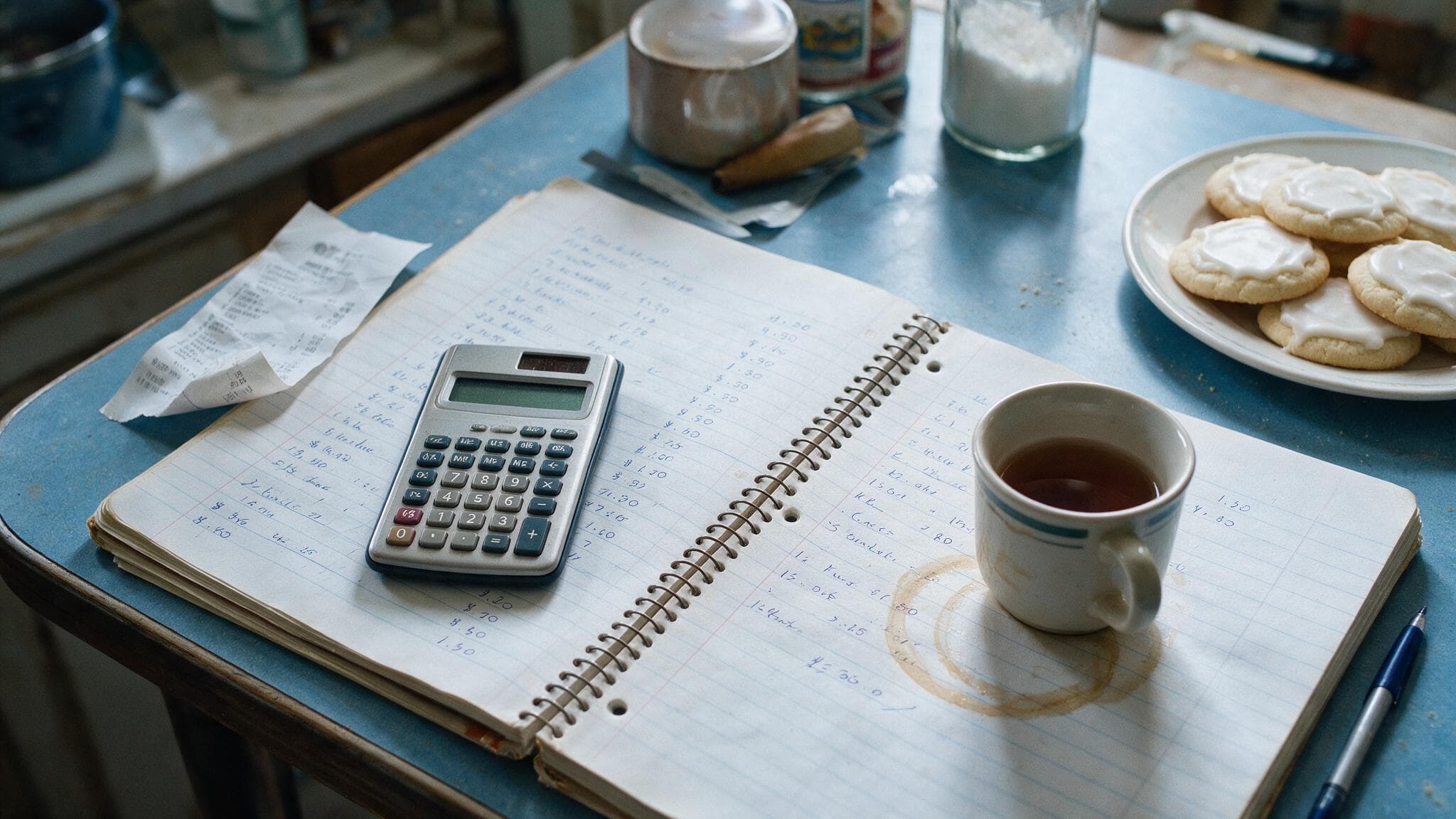
Start with food cost, build up from there
The right price is built, not guessed. Every price comes from four ingredients, and only one of them is what you bake with:
- Food cost. What the raw ingredients of one item actually cost you at the store, receipts in hand. Cost a full batch, then divide.
- Labour. Your prep + bake + decorate + cleanup hours × the hourly rate you want to earn. Decorating is where most bakers lose the most unpaid time.
- Overhead. Boxes, boards, ribbon, packaging, delivery gas, oven electricity or gas, dishwasher cycles. Typically 10–15% of the total.
- Profit margin. What's left for you after the first three. Aim for 15–25%; below that, you're running a hobby, not a business.
Add those four and you have a price. Need a shortcut? Divide your food cost by your target food-cost percentage: if ingredients cost you $4 and you want them to be 30% of the price, the item sells for $4 ÷ 0.30 = $13.33.
The hidden costs that quietly eat your margin
Three costs make home bakers' margins disappear without warning. Tasting and recipe development, the test batches nobody paid for. Free samples and "bonus" portions, the extra cookies you always throw in the box. Delivery time, the 40 minutes door-to-door that no one counted as labour. Track these for one month and add a flat 8–12% to every quote. You'll stop subsidising your own business out of your savings.
Take bakery orders online
Your menu, payments, and pickups in one shareable link. No website needed.
Get started freeSee an example storePer item, per dozen, per platter, or per person?
The same baking can be priced four ways. The format you pick changes how the customer thinks about value, and how much you actually make.
- Per item. Best for custom cakes, celebration bakes, and anything one-of-a-kind. Easy to compare, easy to scale up.
- Per dozen. Best for cookies, cupcakes, and pastries. Raises the average order and keeps the per-unit price out of sight.
- Per platter. Best for dessert tables, buffets, and shared spreads. Hides the per-portion price, so richer items don't cause sticker shock.
- Per person. Best for real events (weddings, corporate). Lets you bundle 3–4 items into one flat per-head rate.
Most home bakers earn the most from per-dozen and per-platter orders, because both formats give you pricing flexibility while keeping the math simple for the customer.
Raising your prices without losing customers
Annual price increases are normal. Your suppliers raise theirs every year. The trick is how you raise them. Don't email customers a new price list; redesign the menu. Bundle items, adjust portion sizes, swap an item or two. A new menu with new prices reads as a fresh offer; a 10% bump on the old menu reads as a tax. And when you do raise prices, do it everywhere at once, never quietly on new customers only. Your loyal ones notice. They don't forget.
Home bakers who reprice their menu once a year, even by 5%, earn 30–50% more over five years than bakers who hold prices flat to keep customers happy.